
February 2021 | Press releases
SYNLAB reiterates dangers resulting from improper use of rapid antigen tests
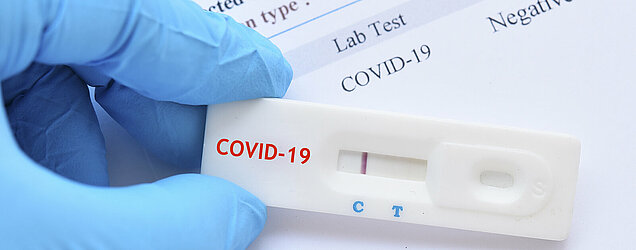
SYNLAB, the leading medical diagnostic services provider in Europe, emphasizes that negative rapid antigen test results must not lead to a reduction of precautionary measures nor grant access to safe environments.
Many individuals with lower viral loads (mostly pre-symptomatic and asymptomatic people) are not detected as positive for SARS-CoV-2 by rapid antigen tests, due to the limited sensitivity of these tests. These people are generally deemed to be or become contagious. Manufacturers also recommend continuing following all precautionary measures, even after receiving a negative rapid antigen test result. In any case, the only diagnostic tool which can be used to create and protect safe environments is RT-PCR (or equivalent NAAT*) testing. Given the generally good validity of positive rapid antigen test results (esp. when testing symptomatic individuals), they can be considered as supplementary tools in RT-PCR-based safety concepts.
As shown by SYNLAB’s study conducted at the end of last year, rapid antigen tests are not suited for testing people at their workplace as on average 40% of the virus carriers can be missed. The limited accuracy of rapid antigen tests has also been underlined in the position paper from the National Research Network of University Medicine on COVID-19 in Germany. The position paper questions the validity of a negative test result. A recent study by the Bavarian State Government supports SYNLAB’s concerns of the inappropriateness of rapid antigen tests to create safe environments. In roughly 30 percent of individuals, who tested positive through PCR tests, the virus was not detected by rapid antigen tests. Medical experts urgently warn against relaxing hygiene rules in nursing homes, where rapid tests are frequently used. Also, the following studies confirm that more than half of the asymptomatic SARS-CoV-2 carriers have been missed using rapid antigen tests: CDC – Centres for Disease Control and Prevention, UK Parliament, British Medical Journal.
Another major cause for false negative results is the incorrect sampling of testing material e.g. by non-professionals and/or at home sampling. Sampling by nasopharyngeal swabs, for rapid antigen tests like for PCR, should be conducted by expert staff.
Medical studies confirm that false negative results can provide people with a false sense of security, which increases the risk of further infection and undermines the progress in containment of the global SARS-CoV-2 pandemic. All this underlines and reinforces the continued need for the high sensitivity and specificity of PCR tests, which remain gold standard for SARS-CoV-2 testing. To meet this demand and offer best support during the global pandemic, SYNLAB is continuously working on increasing availability, shortening turnaround time and improving convenience of PCR tests by e.g. our pain-free sampling methods such as saliva/mouthwash sampling, which is suitable and safe for home use.
To be able to return to normal, or to create and preserve safe environments, we need to act and test in a responsible and accurate manner and rely on PCR as the gold standard for SARS-CoV-2 testing.
* Nucleic-acid amplification tests (NAAT, including RT-PCR, TMA and LAMP) evaluate the presence or absence of the CoV-2 genome.