

Antibiotic use is increasing worldwide. With serious consequences: In 30 years, antibiotic resistance could be responsible for up to 10 million additional worldwide deaths per year.
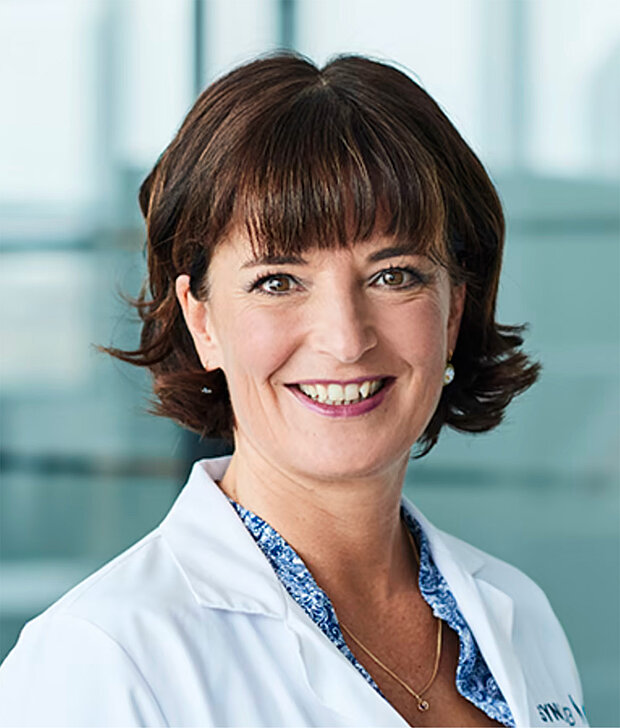
About Dr Christina Orasch
Dr Christina Orasch is the Director of Infectious Diseases and Microbiology at SYNLAB Switzerland. Her areas of expertise are general internal medicine, infectious diseases and hospital hygiene.
Having vast experience from working in hospitals with inpatients and outpatients, Dr Orasch’s role as a clinician at SYNLAB is to bridge the gap between doctors and the laboratory. This means making sure that the lab results are understandable for the doctors and that they can turn to us for advice.

The Antibiotic Stewardship (AS) initiative advocates the rational use of antibiotics. How can this be achieved?
The aim is to use fewer antibiotics and to use them in a more targeted way, adapted to the pathogen. Broad-spectrum antibiotics and reserve antibiotics should be avoided if possible. According to the Centers for Disease Control and Prevention, CDC, a radical change in the use of antibiotics is required, otherwise resistant microorganisms will cause about 10 million deaths worldwide by 2050. And the World Health Organisation (WHO) also warns that maintaining the efficacy of antimicrobial agents is the greatest challenge facing medicine in the 21st century.
According to public health data, global antibiotic consumption in human medicine has increased by 36 percent in the last decade. How worrying is this increase?
The higher the antibiotic consumption, the greater the risk of antibiotic resistance. Even though Switzerland, for example, is not yet as affected as other countries, the situation is still worrying. Because even in this country we are noticing an increase in patients who have infections with resistant microorganisms. Antibiotic resistance is also called the "silent pandemic": it affects the whole world, and even if it is not as acute as SARS-CoV-2, it slowly develops into the wrong direction. The culprit is the widespread and unreflected use of antibiotics in veterinary and human medicine.
Is there awareness of "antibiotic stewardship" among the medical profession?
The awareness is there. However, the challenge lies in the concrete implementation of the measures. According to current studies, 80 percent of antibiotic prescriptions are made in the family doctor's office. Of these, about 60 percent have an unclear indication. Often, antibiotics are prescribed out of concern about a deteriorating state of health.

Incorrectly?
Yes. A study with 30,000 participants showed, for example, that the antibiotics prescribed for an acute respiratory tract infection did not prevent pneumonia and did not lead to a reduction in subsequent hospital admissions. Many diseases such as urinary tract infections, middle ear infections or other respiratory tract infections can be treated with symptomatic therapy. Only if this is unsuccessful should antibiotics be resorted to. In addition, antibiotics are also prescribed far too quickly and too often for children.
Patients also have expectations. Their impression is that thanks to antibiotics they will be back on their feet in no time. The dissatisfaction can then be great when the doctor first prescribes bed rest and an anti-inflammatory drug.
In this context, it is important that patients are informed – about the fact that antibiotics are ineffective against viruses, for example, and that there is a danger of resistance development.
How can advanced diagnostics reduce the use of antibiotics without compromising patient outcomes?
Using diagnostics helps to understand what kind of a pathogen we are dealing with and how to best fight it. Selecting the right narrow spectrum and pathogen-adapted antibiotics is key for a targeted treatment.
So, when suspecting an infectious disease, a microbiological sample should be taken to identify the exact pathogen causing the disease. Only this allows us to uncover its vulnerability to different treatments and avoid the blind and excess use of (broad spectrum) antibiotics.