
What is Chronic Kidney Disease and Why Does it Matter?
Chronic kidney disease (CKD) is a long‑term, progressive loss of kidney function. Because it usually develops without noticeable symptoms initally, many people are diagnosed only once the disease has advanced.
CKD is a major global health issue. Estimates suggest that around 850 million people are affected worldwide, and in 2023, approximately 788 million adults were living with CKD. Detecting the disease early makes a significant difference: timely treatment can slow progression, protect long‑term health, and reduce the need for intensive therapies like dialysis.

On World Kidney Day, we spoke with Sebastián Tenorio Vargas, HUB Lead for Cardiovascular and Renal at SYNLAB Colombia:
Why are diagnostic tests essential for early CKD detection?
CKD often progresses silently, making diagnostic testing a critical screening tool. It allows clinicians to identify CKD before symptoms appear and to intervene early, reducing the risk of substantial kidney damage.
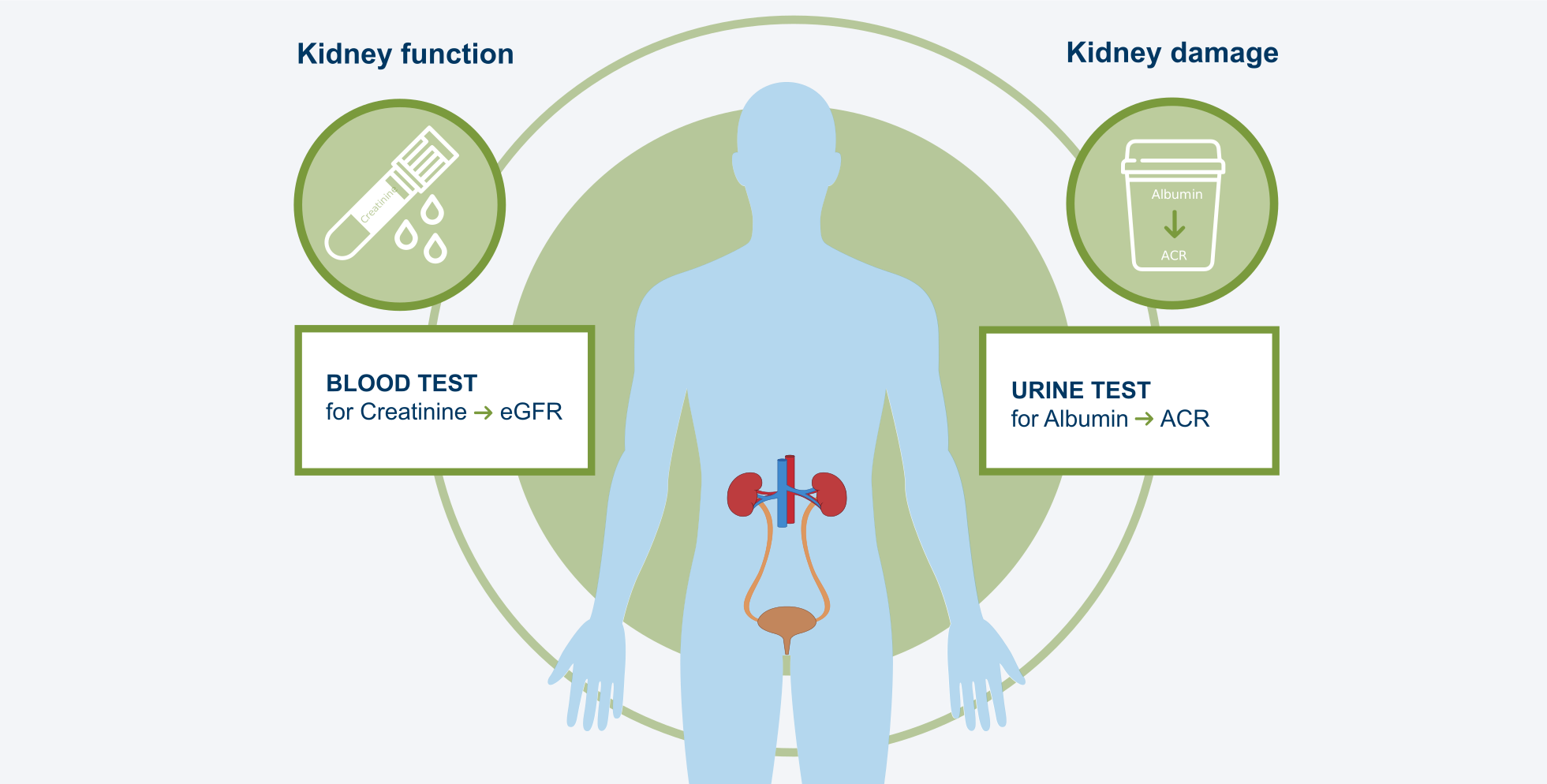
The most effective screening approach combines tests for both kidney function and kidney damage:
- Serum creatinine to estimate the glomerular filtration rate (eGFR)
- Urine albumin, ideally measured as an albumin‑to‑creatinine ratio (ACR)
Relying on creatinine alone can miss early stages of CKD. Reviewing both eGFR and albuminuria together improves early detection, supports risk assessment, and guides timely follow‑up and treatment, helping prevent progression to advanced CKD and dialysis.
According to Sebastián, the greatest impact comes from focused, repeated screening in people at higher risk – those with diabetes, hypertension, cardiovascular disease, obesity, or older age – rather than relying on a single result.
How is SYNLAB Colombia addressing the growing burden of CKD?
SYNLAB Colombia is tackling CKD through a practical, population‑based approach for adults: using diagnostics not just to report laboratory numbers, but to identify risk early and convert it into actionable insights.
The model works by:
- Applying clinical rules based on guidelines to stratify risk and prioritise patients
- Integrating and standardising results from laboratory information systems
- Consolidating patient data longitudinally
This transforms isolated results into clear clinical signals that support timely follow‑up.
The approach is already in use in population‑based projects in Colombia. In nephroprotection, it helps classify patients using KDIGO* stages and identify high‑priority subgroups. In cardio‑renal‑metabolic programmes, it enables early detection of cohorts such as Cardio-kidney-metabolic (CKM) syndrome, severe dyslipidaemia, and metabolic deterioration.
The goal: detect more patients earlier, classify them more accurately, and enable intervention before disease advances.
How do diagnostic insights guide timely therapeutic interventions?
Diagnostic insights move clinicians from suspicion to action. They not only confirm CKD but also define severity, estimate risk, and signal how urgently a patient needs follow‑up or treatment.
Interpreting kidney function and albuminuria together, and tracking them over time, supports earlier and more precise decisions, like assessing treatment response and detecting progression before complications arise. This helps clinicians adjust medications, increase monitoring, initiate a nephrology referral, or manage broader cardio‑renal‑metabolic risk.
Ultimately, diagnostics turn early detection into targeted, actionable care that helps prioritise patients and reduces progression to advanced disease and dialysis.
* KDIGO = Kidney Disease: Improving Global Outcomes is a non-profit foundation developing global, evidence-based clinical practice guidelines for kidney disease