

Recent Progress in HIV/AIDS
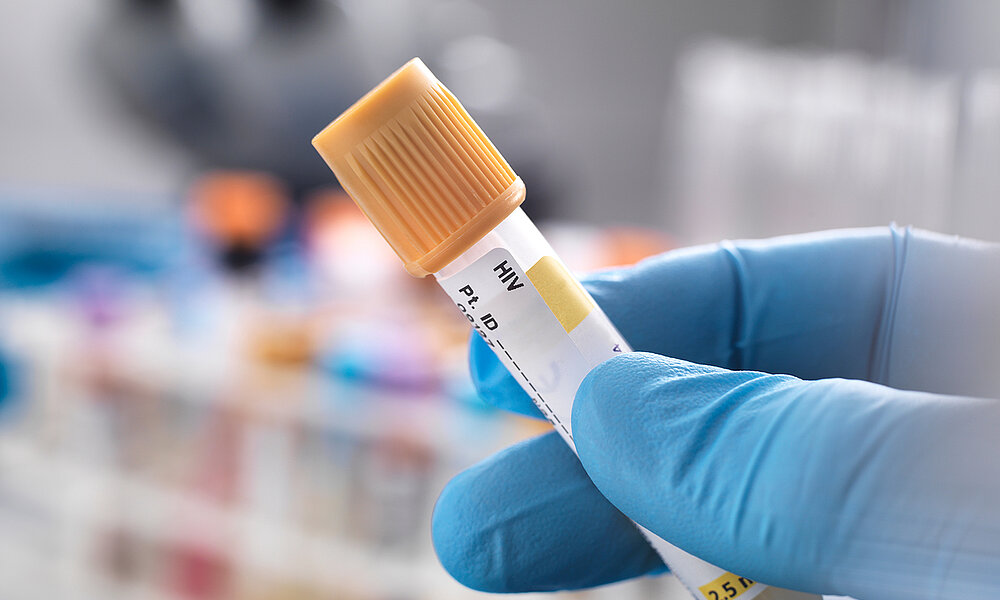
This month's update on laboratory biomarker research in major diseases focuses on recent progress in HIV/AIDS. As we observe World AIDS Day on 1 December 2023, we not only honour those impacted by HIV/AIDS but also reaffirm our dedication to advancing research and treatment in this area.
Biomarkers are critical in the management of HIV/AIDS, helping to understand disease progression and treatment response. The intersection of HIV with cardiovascular diseases is of particular concern, as HIV-positive individuals are at a heightened risk of cardiovascular complications. This necessitates a more intricate approach to their healthcare. SYNLAB's diagnostic expertise is vital, enabling us to decipher complex biological data and how different genetic profiles may respond to treatments, which is essential for tailored and precision medicine. Our ongoing goal is to enhance our understanding of HIV/AIDS via biomarkers, tackle its association with cardiovascular disease, and leverage precision and personalised medicine. A multi-disciplinary approach that combines clinical and advanced lab research, including bioinformatics, is imperative for future breakthroughs in HIV/AIDS management.
Recent key publications
1) Dynamics and durability of HIV-1 neutralization are determined by viral replication.
Nat Med 2023; 29:2763-2774. Schommers P, Kim DS, Schlotz M et al.
This comprehensive study explores the dynamics and durability of HIV-1-neutralising antibodies (nAbs) in individuals with HIV-1, providing critical insights that are invaluable for the ongoing quest to develop an effective HIV vaccine. By analysing the HIV-1-neutralising immunoglobulin G (IgG) responses in a large cohort of 2,354 persons, the research identifies key factors influencing the potency and breadth of nAb responses, a cornerstone in the design of future HIV-1 vaccine regimens. Moreover, the findings reveal the persistence of nAb responses for several years, even at low antigen levels, offering hope and guidance for the development of vaccines that could elicit long-lasting nAb responses against HIV-1.
2)HIV-PULSE: a long-read sequencing assay for high-throughput near full-length HIV-1 proviral genome characterization.
Nucleic Acids Res 2023; 51:e102. Lambrechts L, Bonine N, Verstraeten R et al.
HIV-PULSE is shown as an innovative high-throughput, long-read sequencing assay, revolutionising the study of HIV-1 reservoirs by streamlining the process of near full-length HIV-1 proviral genome sequencing. By utilising unique molecular identifiers (UMIs) to tag individual HIV-1 genomes, HIV-PULSE eliminates the need for labour-intensive limiting dilution steps, allowing for the efficient and cost-effective amplification of numerous genomes simultaneously. This breakthrough methodology, validated through extensive testing on HIV-infected cell lines and blood samples from individuals on antiretroviral therapy, promises to significantly enhance our understanding of HIV-1 reservoir composition and dynamics, a vital step towards the development of targeted therapies and curative efforts.
3)A negative correlation between hsa-miR29a-3p level and HIV-1 viral load in human serum; potentiate criteria for patients screening. Microb Pathog 2023; 184:106376. Mahmoudi MK, Letafati A, Soltani BM et al.
This article delves into the ground-breaking discovery of a potential link between the microRNA hsa-miR-29a-3p and the regulation of HIV-1 viral load, offering new insights into the complex mechanisms of HIV-1 infection. Through meticulous research and analysis of serum samples from both HIV-positive patients and matched controls, the study reveals a significant negative correlation between hsa-miR-29a-3p levels and HIV-1 viral load. The findings not only provide a promising new biomarker for monitoring HIV-1 infection but also pave the way for innovative approaches in HIV-1 treatment strategies, making this a must-read for experts in virology and infectious diseases.
4) Clinical performance of a new multiplex assay for the detection of HIV-1, HIV-2, HCV, HBV, and HEV in blood donations in Catalonia (Spain).
Transfusion 2023; 63:2098-2105. Sauleda S, Bes M, Piron M et al.
This study thoroughly evaluates the Procleix UltrioPlex E® / Panther® assay, a ground-breaking advancement in the field of blood donation screening, capable of simultaneously detecting HIV-1, HIV-2, HCV, HBV, and HEV. Conducted on the Procleix Panther® system, the study rigorously assesses the assay's clinical sensitivity and specificity through the testing of over 10,000 donations, offering a direct comparison with current screening methods. The findings demonstrate UPxE's remarkable efficiency and reliability, proposing a significant enhancement in blood safety and the potential to streamline screening processes in blood banks globally.
5) Parietal resting-state EEG alpha source connectivity is associated with subcortical white matter lesions in HIV-positive people.
Clin Neurophysiol 2023; 156:19-27. Babiloni C, Del Percio C, Piervincenzi C et al.
This article explores a novel link between parietal resting-state electroencephalographic (rsEEG) alpha source connectivity and subcortical white matter vascular lesions in HIV-positive individuals. Utilising a combination of clinical, rsEEG, and MRI data from HIV-positive persons and healthy controls, the study investigates how these EEG abnormalities correlate with white matter changes, providing insights even in the absence of neurocognitive disorders. The findings highlight the potential of MRI-rsEEG markers as a screening tool for identifying HIV-positive individuals at risk of neurocognitive disorders, representing a significant advancement in the understanding and management of neurological complications associated with HIV.
6) Evaluation of the effectiveness of a nationwide precision medicine program for patients with advanced non-small cell lung cancer in Germany: a historical cohort analysis.
Lancet Reg Health Eur 2024; 36:100788. Kästner A, Kron A, van den Berg N et al.
This pioneering study presents compelling evidence of the effectiveness of the national Network Genomic Medicine (nNGM) Lung Cancer programme in Germany, demonstrating a significant survival benefit for patients with advanced non-small cell lung cancer (aNSCLC) participating in the programme. By utilising real-world data, the research offers a thorough comparison between patients within the nNGM and those receiving usual care, underscoring the impact of precision medicine on overall survival and the increased use of targeted therapies. The findings are crucial for healthcare professionals and researchers, highlighting how precision medicine programmes can revolutionise personalised lung cancer care and integrate the latest scientific advancements into everyday clinical practice.

Follow our newsletter and stay tuned for the upcoming, where we'll delve into the latest discoveries shaping the future of diagnostic and therapeutic approaches. Join us as we navigate the ever-evolving landscape of medical research, bringing you the most promising developments in the field.
Follow on Linkedin
Keywords: