
World Antimicrobial Awareness Week
18 - 24 November 2024
Antimicrobial resistance (AMR), also known as the silent pandemic, is a major global threat to our communities and healthcare systems. Resistance grows when bacteria, viruses, fungi and parasites mutate and no longer respond to known antimicrobial agents, such as antibiotics. Without viable treatment options, it can be difficult or even impossible to treat an infection and control its spread.
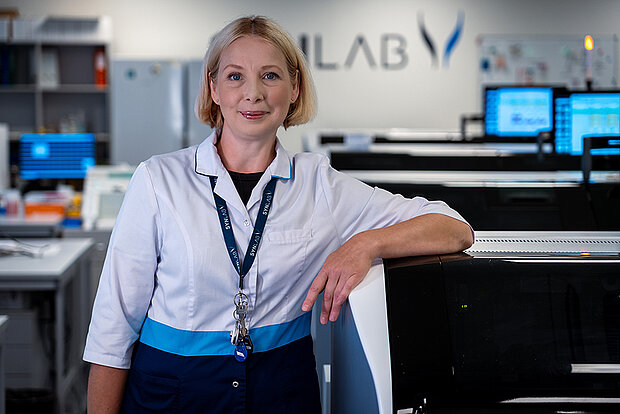
SYNLAB Estonia
Responsible laboratory specialist in Clinical Microbiology
Helle Järv has worked as laboratory specialist from 1999-2017 in Tartu University Clinics and from 2017 to date in SYNLAB Estonia. Helle’s main interests are clinical mycology and clinical parasitology. Author of several publications focused on rare pathogens and laboratory methods of susceptibility testing of fungi. Helle has been named by Clinical Microbiology Section of the Estonian Society for Laboratory Medicine to represent Estonia in EUCAST subcommittee for antifungal susceptibility testing (EUCAST AFST) .
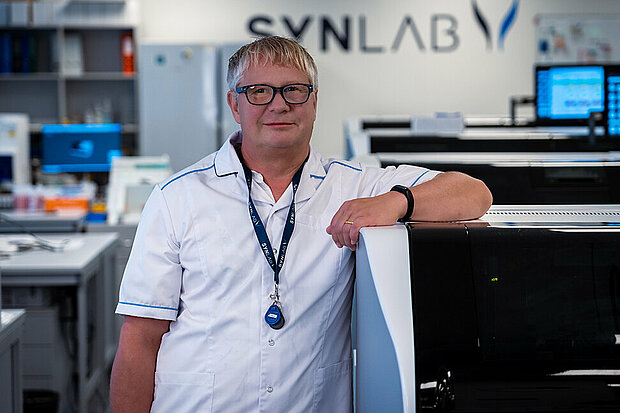
CMO SYNLAB Estonia
Associated Professor, University of Tartu
Dr Paul Naaber is a clinical microbiologist with over 25 years of experience in antimicrobial resistance topics such as AMR surveillance and molecular epidemiology. He is the head of the Clinical Microbiology Section of the Estonian Society for Laboratory Medicine and is a member of the national AMR steering committee.
Dr Paul Naaber and Helle Järv, the World Health Organisation (WHO) ranks antimicrobial resistance as one of the top global public health threats of our time. How are antimicrobial-resistant infections impacting global health?
Paul: Antimicrobial resistance affects the world in multiple ways: infections caused by multidrug-resistant microbes increase mortality rates, as well as raise healthcare costs. Several alarming prognoses have been published regarding the future global burden, mortality and costs associated with antimicrobial resistance. It is now understood that managing AMR solely within human medicine is insufficient, and a One Health approach is being advocated: antimicrobial resistance also spreads among animals and within the environment, impacting human health and vice versa.
Helle: There is also public concern about antifungal resistance. We see that the uncontrolled use of antifungal agents develops resistance among organisms which used to be susceptible.
One example is terbinafine resistance of dermatophytes, types of skin fungus. A dermatophytosis epidemic has been recorded in India in the last decade and, after a thorough analysis of data, we know that we are dealing with new resistant species. These health challenges are not local, as resistant bacteria and fungi travel together with people. The resistant dermatophyte from India I read about in 2019 appeared on my lab desk two years later in an Estonian patient sample. That is real life. Our list of antifungals is relatively short, and resistance is bad news for doctors and patients, always and everywhere.
How does your work in microbiology respond to this challenge?
Helle: We are generating data on antimicrobial susceptibility every day in the lab, for two main uses. The first is how to improve patient treatment. Secondly, these data are shared with health authorities like WHO and ECDC (European Centre for Disease Prevention and Control). The quality of susceptibility data is very important, as it guides decisions on antimicrobial politics for the next years or even decades. Estonia is a small country with limited influence on global decisions, but we can be the first to notice warning trends. Local data are important to notice outbreaks of bacteria carrying novel resistance mechanisms and cooperation between laboratories and national healthcare authorities is key to carry out quality surveillance.
Paul: Additionally, an important part of our work is educating both doctors and patients, from raising awareness of the issue to recommending optimal diagnostics and treatment.
What are the most common misconceptions about the use of antibiotics in treating infections today?
Paul: There is still a belief among some doctors and patients that giving antibiotics for a common cold 'just in case' is safe. Often, the problem of antimicrobial resistance and its significant future growth are not fully recognised. Only recently has attention turned to the microbiota-damaging effects of antibiotics and the associated rise in lifestyle diseases, ranging from obesity and allergies to psychiatric disorders.
Helle: It depends, do we speak about patients or doctors? Patients still ask for antibiotics from doctors, sometimes vigorously, and believe that antibiotics do miracles. We should educate people that antibiotics do not treat viral infections, and that antibiotic treatment is very individual. Doctors, on the other hand, should be familiar with both surveillance and epidemiology data concerning patient and pathogen groups.
In September, you both coordinated a training on Antimicrobial Susceptibility Testing organised by the European Committee on Antimicrobial Susceptibility Testing (EUCAST) and the Estonian Society for Laboratory Medicine (ELMÜ). Why is this course important and what were the key takeaways?
Helle: This postgraduate course focused on implementing the EUCAST expert rules on susceptibility testing in routine laboratory practice. We arranged two visits and hands-on workshops at SYNLAB Estonia and the North Estonian Medical Centre laboratories. Our experts covered various topics: aerobic, anaerobic, mycobacterial, fungal susceptibility testing and clinical breakpoint-setting, novel methods for susceptibility testing, antibacterial resistance surveillance and epidemiology.
The event had participants from 18 countries, including non-EU countries. EUCAST is more and more widely used also outside of the European Union which helps us to better harmonise and compare microbial susceptibility data sets internationally.
Paul: High-quality raw data are essential for effective AMR surveillance and adequate treatment of infectious diseases. Standardisation and quality control are therefore crucial for ensuring the reliability of laboratory results, which was the primary focus of this course. Another key aspect was building personal connections with both the course participants and the EUCAST team.
Awareness, prevention and access to quality diagnostics and appropriate treatment are listed as priorities in the fight against AMR. In your experience, what are our biggest challenges in fighting AMR globally and where do you see the main opportunities to make an impact for the better?
Helle: ESCMID and EUCAST recommend infectious diseases and medical microbiology specialists to form national antimicrobial susceptibility surveillance committees (NAC). Local committees or societies are the best way to share knowledge about AMR surveillance. Estonian microbiologists work together under the Estonian Society for Laboratory Medicine (ELMÜ), representing Estonia in EUCAST subcommittees and guiding the implementation of the EUCAST standard. Now, all Estonian microbiology laboratories follow this standard and the Society keeps everybody up-to-date. We are also helping laboratories to participate in surveillance projects and to work as a partner for governmental authorities to initiate projects monitoring antibiotic resistance. For us it is clear that AMR data collection works from the bottom to the top and not the other way around.
Paul: In addition to what has already been mentioned—implementing best practices in diagnostics and treatment of infectious diseases: determining when and which laboratory tests to use, how to interpret them, and what is optimal (antimicrobial) treatment. This will minimise harm to our microbiota and reduce the spread of resistant microbes. It is essential that antimicrobial resistance be viewed globally within a One Health approach.