
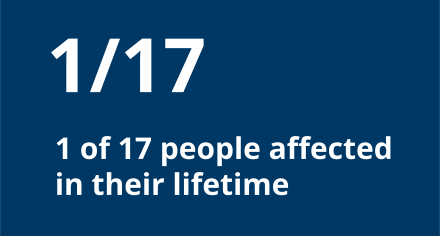
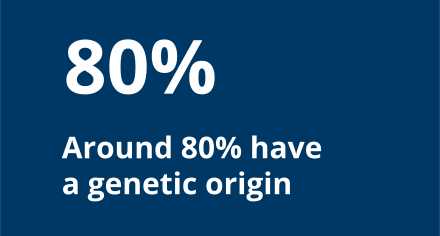
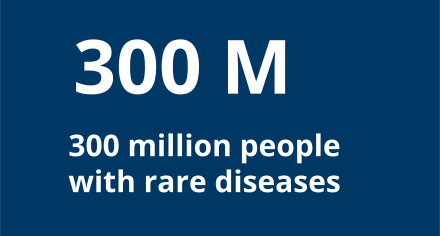
On 28 February, the world gathers to raise awareness for rare diseases, promoting fair and equitable access to diagnosis and treatment. One of the key messages of this important day is to increase knowledge about the diagnostic odysseys patients and their families face: living with misdiagnoses or having no diagnosis at all.
Special diagnostics and genetic consultation are at the core of identifying rare diseases – which is a significant first step on a long journey. Our genetic experts at SYNLAB are dedicated to supporting patients throughout all stages in life, from pre-implantation to adulthood.
Thank you to all the colleagues and families for sharing their stories. The names of some of the patients have been changed to protect the identity of the persons.
Get to know us and our work through these short stories and interviews. Learn how we partner with patients and their doctors to chart out the unknown and improve the lives of those affected by rare diseases.

Breaking the Chain – How Pre-Implantation Genetic Testing Gave Hope
Georgina did not believe that it was possible to have children without the risk of passing on her genetic disease, which given her personal experience was an unbearable thought to her. However, the availability of pre-implantation genetic testing (PGT) gave hope and ultimately a solution.

Making sense of genetic screening
Exploring prenatal testing for genetic risks
Margot and Gerard’s first child, Joseph, was born healthy. However, as time passed, Joseph began to show developmental delay, missing the usual milestones. When he was 7 months old, he was diagnosed with Williams Syndrome, a rare genetic microdeletion of genes on chromosome 7, affecting for instance intellectual and psychomotor development.

The impact of early SMA testing
From despair to determination
Spinal muscular atrophy (SMA) is a severe, progressive neuromuscular disorder due to genetic mutations or deletions of the SMN1 gene. Patients present as “floppy infants” with early onset of muscle weakness, failure to achieve motor milestones, and limited survival without ventilatory support in the most severe cases.

Cracking the genetic code
A new genetic test finally brings understanding
Luzanne, a woman of West African origin, was diagnosed with kidney disease when she was 11 years old. When she first found out she had kidney problems her kidneys had already failed, and unfortunately the cause was unknown.

A healthy baby against all odds
Our patient, a 38-year-old man, had suffered all his life from the skeletal disease "Hereditary Multiple Osteochondromas" (HMO). The condition had led to multiple operations to correct many recurrent bone deformities. He was the only member in his family to be affected.
The patient and his wife dreamt of having children but could not envision transmitting the disease to a child. Their best option was preimplantation genetic testing (PGT), allowing impregnation with an unaffected embryo.

Only half a dozen others
In the final months of 2018, medical geneticist Dr Silvia Shelby from the Romanian National Clinical Centre for Children’s Neurorecovery, Dr. Nicolae Robanescu Hospital, was contacted by a paediatric neurologist about an unusual case:
A 10-year-old girl with a particular type of walking, short stature, microcephaly, severe intellectual disability, and unusual facial features. She had undergone genetic tests since she was a baby, but her condition had remained unknown.